
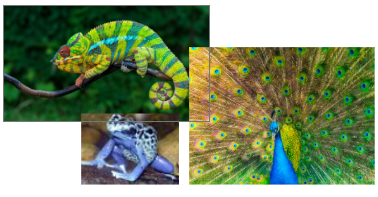
Ever wonder about how chameleons can camouflage into different colors? And how did they achieve this? In this story I will be going over that topic in the paragraph about camouflage but that’s not all, I will also talk about the benefits colors also help with like when it comes to mating and protection against predators. Well, without further ado, I shall tell you all about the importance of colors on animals.
In the wild, some animals, like, for example, frogs, will have certain colors and patterns to warn predators and prey that they are dangerous and not a very good entree. According to this video, animals warning with bold colors is called aposematism by scientists, which means a mechanism that displays bold colors to show toxicity to others. Now, similar to what I stated above, there is another thing that colors help or protect animals with, which is camouflage.
For animals, camouflage is a vital thing for survival against predators. The most well-known example is chameleons and their active color change. While it can be for camouflage, it is not its primary use, as it is typically for temperature regulation and to display mood or dominance. Sometimes you can hardly see an animal because what’s around them helps them blend in with the surroundings, even if they can’t actively change their color; this can be said about grasshoppers and grass or stick insects around trees. Colors not only help animals with protection and communication but also play a vital role in how females choose a mate.
Like people, animals have their own way of showing the person they like that they’re the best for them. According to timesofindia.indiatimes.com, one way animals show that they are good mates is by having bright colors on as it shows that the male has a good immunity and good food intake. Something else that bright colors indicate to mates is that while the vivid colors make them more susceptible to predators it’s because of the bright colors the female will know that the male is a strong and smart enough mate for them, since they can live with something that makes them obvious to predators.
For these reasons, animals depend greatly on colors to be protected, to be able to mate, and camouflage to their surroundings. There were some things that were not mentioned in some places because they just were not about the main topic, or could fit somewhat within the same category, like with breaking up the body outline(disruptive coloration). If this story got you interested to learn more about how colors affect animals, then you can check out plt.org or askabiologist.asu.edu. You might learn more things other than how colors affect animals!